
As search ecosystems evolve and generative AI reshapes how users find information, the foundational rules of content strategy are shifting. We are no longer competing just with other websites; we are competing with instant, AI-generated overviews. In this landscape, the survival of any organic growth strategy relies on understanding the stark difference between commodity and non-commodity content.
As John Mueller pointed out in May 2025: “Focus on making unique, non-commodity content that visitors from Search and your own readers will find helpful and satisfying.”
Google’s Search Liaison, Danny Sullivan, recently drew a line in the sand between Commodity and Non-Commodity content.
The verdict?
Google prefers the latter.
Some creators are waiting for a “future update” to change the game, but the evidence shows the game has already changed. We are no longer moving toward a world where original insight wins; we are already living in it. If your content is a commodity, it’s already invisible.
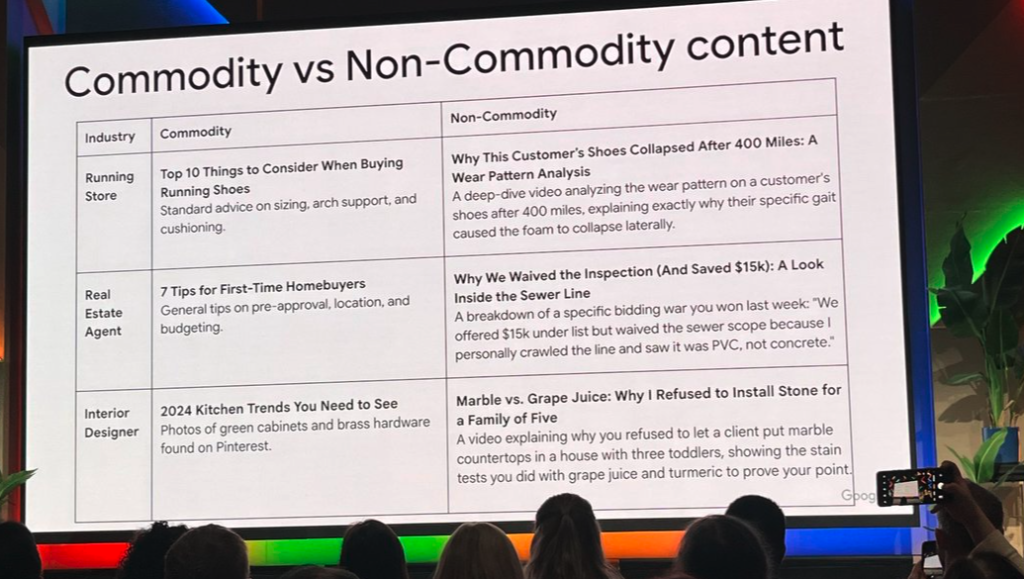
But what exactly separates the two, and how can SEO specialists leverage everyday assets to build an impenetrable moat around their rankings?
The Trap of Commodity Content
Commodity content is information that is universally available, undifferentiated, and cheap to produce. It is the textbook definition, the generic “how-to,” and the recycled listicle.
Characteristics of Commodity Content:
- Easily Replicable: It relies entirely on secondary research. If an AI can scrape the web and synthesize the exact same article in three seconds, it is a commodity.
- Zero Information Gain: It adds no new net facts, opinions, or data to the internet.
- High Churn Risk: This content is the most vulnerable to algorithm shifts and zero-click searches.
For example, if you are managing the digital presence for a local service business, publishing a generic post on “10 Tips for Packing Boxes” is pure commodity. It exists on ten thousand other websites and offers no unique value to the user or to Google’s crawlers.
The Goldmine: Non-Commodity Content
Non-commodity content is the antidote to AI-generated noise. It is rooted in real-world, hands-on experience, unique datasets, and first-hand expertise. It requires effort, access, and insight that a machine simply cannot replicate.
Instead of a generic packing guide, non-commodity content would be: “The logistical challenges of moving out of a 30-story downtown high-rise—documented by our crew.” It answers the questions that AI can’t, because the AI wasn’t there to experience it.
Examples of Non-Commodity Content Formats
To build a strategy around unique insights, consider producing these specific types of content:
- Original Data and Research: Conducting surveys, analyzing your own internal company data, and publishing reports. (e.g., “The Average Cost of Commercial Cleaning in 2026 based on 500 Local Quotes”)
- In-Depth Case Studies: Documenting a specific client problem, the exact steps your team took to solve it, and the measurable outcome.
- Expert Interviews: Transcribed Q&As or embedded video/audio interviews with subject matter experts who possess specialized knowledge that isn’t widely documented online.
- Strong Opinion and Thought Leadership: Taking a definitive, perhaps controversial, stance on an industry trend based on your professional background.
- Proprietary Frameworks or Tools: Creating a unique methodology, calculator, or checklist that solves a specific problem for your audience.
- User-Generated Content: Leveraging the voices, questions, and feedback of actual customers.
Actionable Steps to De-Commoditize Your Content
- Transform Reviews into Case Studies: Don’t let a 5-star review die on a widget. Build out short, data-backed case studies around your best reviews.
- Interview Your Team: Replace AI-generated fluff with recorded, transcribed interviews from the actual technicians or specialists doing the work.
- Lean into Proprietary Data: Aggregate internal data to publish original research that other sites will naturally want to backlink to.
We have moved past the era of content volume. The algorithms are aggressively filtering out the echo chamber. By focusing entirely on unique insights, user-generated experiences, and raw data, you build a digital strategy that isn’t just algorithm-proof—it’s future-proof.